Source review
A look at the target sites before any code: how the data is laid out, how they protect it, what volume is realistic and what it will cost to run.
Scrapers that collect data from sites without an API, at scale and past their protections, and deliver it clean.
Prices, listings, contacts, catalogs: a lot of the data a business runs on lives on someone else's website, with no API and no export button. Copying it by hand works for a hundred rows and falls apart at a hundred thousand.
I build scrapers that turn those pages into structured data you can use: fields parsed and normalized, duplicates removed, and results delivered to your database, CRM, a CSV or Google Sheets on a schedule. You get records, not a folder of HTML.
The hard part is keeping a scraper alive. Sites throttle requests, ban IPs, show CAPTCHAs and change their markup. I've run a scraper for a lead generation client for three years: it processed over a million contacts and got past the site's blocks more than 10,000 times, with proxies, a CAPTCHA service and retries built in, and monitoring that shows when something breaks.
What you get
A look at the target sites before any code: how the data is laid out, how they protect it, what volume is realistic and what it will cost to run.
Proxy pools, CAPTCHA solving services, rate limits, retries and backoff, so one bad response doesn't stop a run of thousands of pages.
Names, addresses, prices and dates turned into consistent fields, with duplicates merged, so the data is ready to use as it arrives.
Headless Chrome through Selenium WebDriver for pages that need JavaScript, logins or clicks. It is slower and costs more, so it only runs where plain HTTP requests fall short.
Runs on a schedule or on demand, with logs, cost and speed per run, and alerts when a site changes and the parser needs attention.
Results in your database, CRM, a REST API, CSV files or Google Sheets, in the format your team already uses.
Case studies
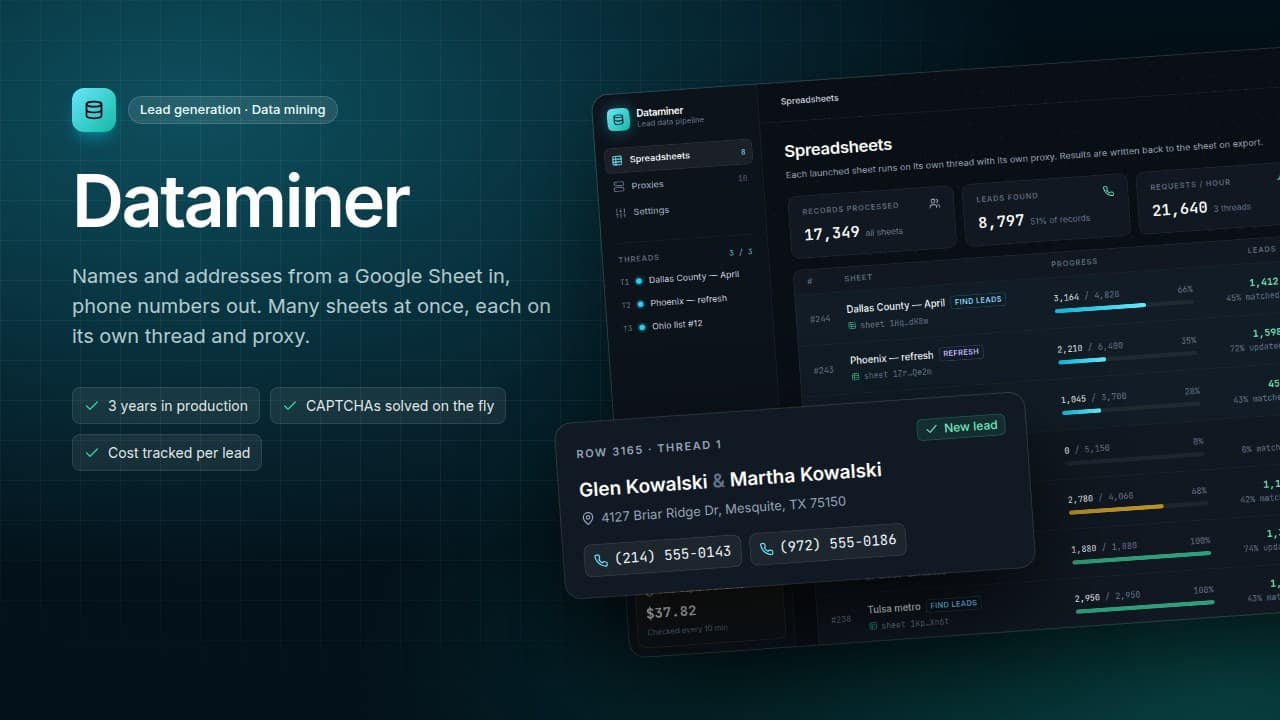
Lead generation · US lead generation business
1M+ contacts processed, 10,000+ site blocks bypassed
An app that scrapes FamilyTreeNow search results and profiles, parses them into phone numbers and address history, and turns the right matches into leads. Work runs on parallel threads, each behind its own proxy, and a paid service solves the CAPTCHAs.
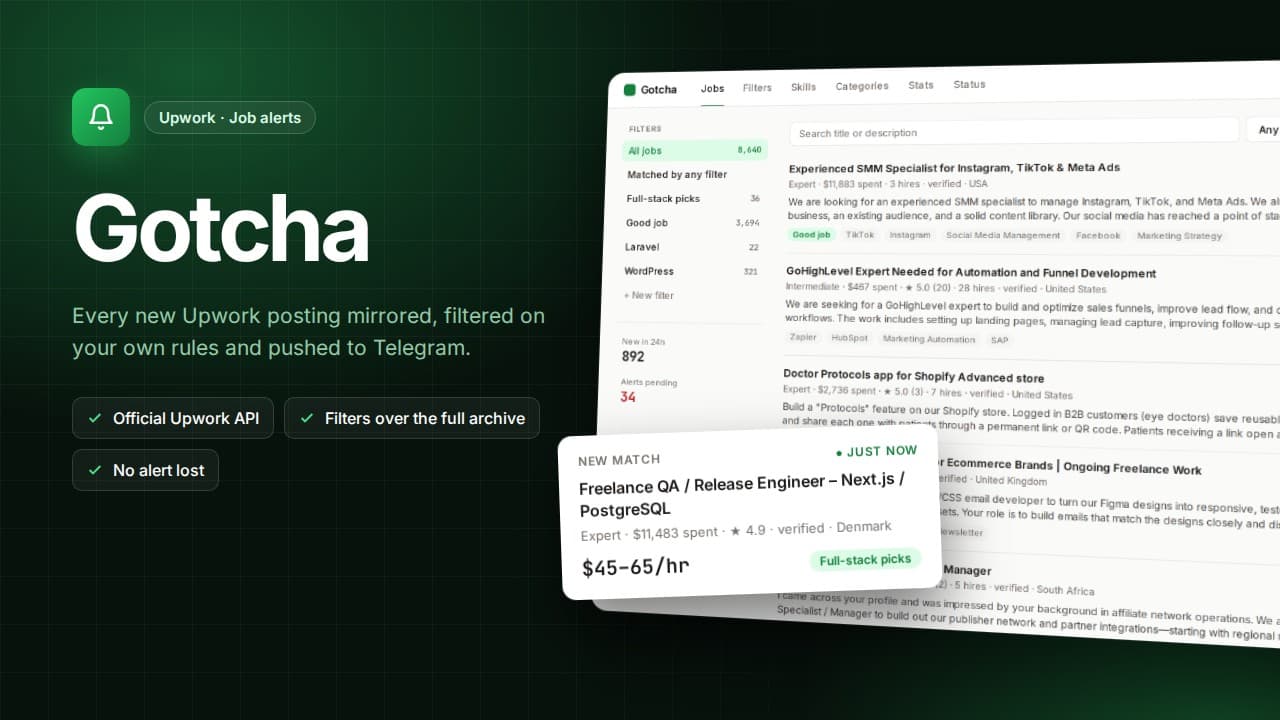
Freelancing / job search · Own product
~3,900 new postings a day, ~500 alerts to Telegram
A personal tool on the official Upwork API: a worker copies every new posting into Postgres, my own filters run over that archive, and the matches arrive in Telegram.
FAQ
Collecting publicly available data is common practice, but the rules depend on the site's terms, your country and the kind of data, especially personal data. We review this before development starts, and I'll tell you if a project looks risky.
Sites change their markup from time to time. Monitoring flags a drop in results or a parsing error, and I fix the parser. I can support scrapers on a small monthly retainer.
If the site has an official API that gives you the data you need, use it: it's more stable and cheaper to run. Scraping makes sense when there is no API or the API leaves out what you need.
Send a short brief and get an estimate within 24 hours. Not sure where to start? Begin with a code audit.